Billionaire Road
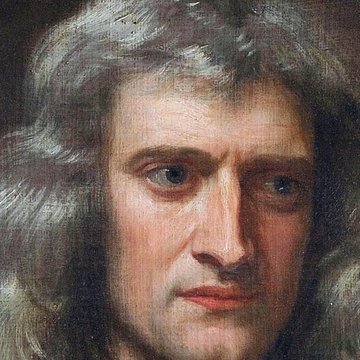
Isaac Newton in 1689, long hair, dark robe

Born 1642. Died 1727.

Isaac Newton

Where the hours went: At home in the plague years.

When plague closed Cambridge, he went home and kept working.
Twenty years later the Principia changed how men saw the sky.
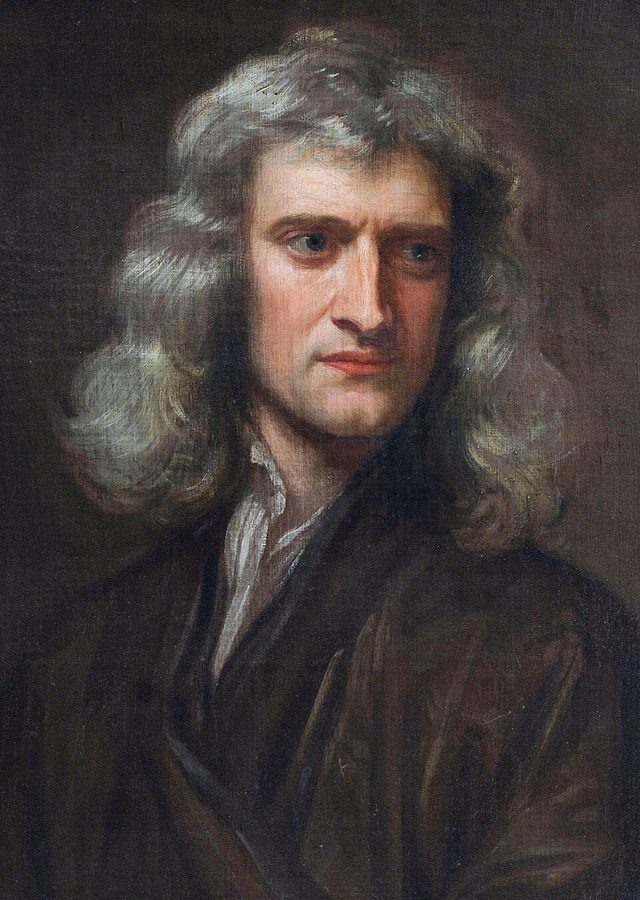
Portrait of Isaac Newton at forty six by Godfrey Kneller
Godfrey Kneller, Isaac Newton, 1689, two years after the Principia. Public domain, via Wikimedia Commons.

In thirty seconds

His hours

Two plague years at home, 1665 to 1667, working alone.

His rep

About eighteen months writing the Principia.

It reached

The laws of motion and gravity, and calculus, still in use today.

Most men think the titans got there on talent.
They got there on where the hours went.

01A working student

He was born in 1642 at Woolsthorpe, in Lincolnshire.
In 1661 he entered Trinity College, Cambridge.[1][3]

02The plague years

In 1665 plague closed Cambridge and he went home to Woolsthorpe.
Over the next two years he laid the groundwork for calculus, his theory of color and universal gravitation.
He called it the prime of his age for invention.[1][2][4][8]

03The telescope

In 1669 he became Lucasian Professor of Mathematics.
He built the first reflecting telescope, and in January 1672 the Royal Society elected him.[1][2][3]

04Eighteen months on one book

In 1684 Edmond Halley came to ask him about the orbits of the planets.
He spent about eighteen months writing the answer.
The Principia came out in 1687.[1][2][6][7]

05The Mint

In 1696 he moved to London as Warden of the Mint.
In 1700 he became its Master.[1][2]

06President and knight

In 1703 the Royal Society made him its president.
Opticks came out in 1704.
In 1705 Queen Anne knighted him.[1][3]

07March 1727

He died in March 1727 and was buried in Westminster Abbey.[1][2]

The legend vs. the reps

The legendAn apple fell on his head and he saw gravity in a flash.

The repsAn apple did fall in the Woolsthorpe garden and set him thinking, he told a friend.
Nothing says it hit his head.
The theory took about twenty years, from the plague years to the Principia in 1687.[5][6][7]

The legend counts a flash.
The record counts reps.
Twenty years from the garden to the Principia.

His years

Every year the record allows, with its source.

1642Born

He was born at Woolsthorpe, in Lincolnshire.[1][3]

1661At 18

He entered Trinity College, Cambridge.[1][3]

1665At 22

Plague closed Cambridge and he went home to Woolsthorpe.[1][4]

1666At 23

At home he worked on calculus, color and gravity.[1][2]

1667At 24

He went back to Cambridge as a fellow of Trinity.[1][3]

1669At 26

He became Lucasian Professor of Mathematics.[1][3]

1672At 29

His reflecting telescope won him a place in the Royal Society.[1][2]

1684At 41

Halley asked him about the orbits of the planets, and he started writing.[1][6]

1687At 44

The Principia came out.[1][6]

1696At 53

He moved to London as Warden of the Mint.[1][2]

1700At 57

He became Master of the Mint.[1][2]

1703At 60

The Royal Society made him its president.[1][3]

1704At 61

Opticks came out.[1][3]

1705At 62

Queen Anne knighted him.[1][3]

1727At 84

He died in March and was buried in Westminster Abbey.[1][2]

Godfrey Kneller, Isaac Newton, 1689, cropped. Public domain, via Wikimedia Commons.

Where his hours went

At home when the plague shut the university.
Eighteen months on one book.
At the Mint and the Royal Society into his eighties.

See where your hours go.

A week is 168 hours.
One minute to see where yours went.

Count your 168 →

See what he was doing at your age →

See how much freedom your money buys →

Sources

  1. Christian History Institute, Significant Events in the Life of Isaac Newton: birth at Woolsthorpe, Trinity in 1661, the plague years, Lucasian chair 1669, Royal Society 1672, Halley 1684, the Principia 1687, the Mint 1696 and 1700, president 1703, Opticks 1704, knighted 1705, death in 1727.
  2. High Altitude Observatory, University Corporation for Atmospheric Research, Isaac Newton: the plague years work, the reflecting telescope and the Royal Society in January 1672, the Principia written 1684 to 1686, the Mint, his death in March 1727.
  3. Wikipedia, Isaac Newton, drawing on Richard Westfall, Never at Rest (1980).
  4. University of Maryland Department of Physics, Social Distancing 1665: Newton at Woolsthorpe in the plague years, the prime of his age for invention.
  5. Scientific American, What's the real story with Newton and the apple: the Stukeley manuscript, digitized by the Royal Society.
  6. APS News, This Month in Physics History: Isaac Newton and the Principia (July 2000).
  7. PBS NOVA, Newton's Principia.
  8. Biography.com, Isaac Newton's plague year discoveries.