Born 1769. Died 1821.
Napoleon Bonaparte
Where the hours went: Over the map.
At nine he was sent to a military school in France.
At twenty six he had an army.
Born 1769. Died 1821.
Where the hours went: Over the map.
At nine he was sent to a military school in France.
At twenty six he had an army.
Thirty seven years of letters, July 1784 to April 1821.
40,497 letters, about three a day.
His Civil Code still governs France and shaped the law of most of Europe and Latin America.
Most men think the titans got there on talent.
They got there on where the hours went.
In 1779, at nine, he entered the military school at Brienne.
In 1785, at sixteen, he was commissioned a second lieutenant of artillery.[5]
In 1793 the port of Toulon was held against the French Republic.
He was a young artillery officer with a plan for the guns.
That December, at twenty four, he was made a brigadier general for his part in taking it.[6]
In March 1800 he had his secretary unroll a great map of Italy on the floor.
He lay on it and pinned the armies with wax heads, red for his, black for the enemy.
He put a red pin at San Giuliano and said that is where he would beat Melas.
That June he beat Melas at Marengo, on the plain by San Giuliano.[1][2]
Andrew Roberts counts sixty battles and sieges in his career.
He lost seven of them, most near the end.
Other counts run past eighty battles, because historians draw the line in different places.[11]
In March 1804 France got its Civil Code.
He chaired many of the long Council of State sessions that argued it out, article by article.[7]
In 1814 he lost his throne and was sent to the island of Elba.
On February 26, 1815 he sailed back to France with about a thousand men.
He reached Paris on March 20 without a shot fired.
Waterloo ended it that June.[8]
On Saint Helena he spent long hours dictating the story of his campaigns.
He died there on May 5, 1821, at fifty one.[9]
The legendHe won almost every battle he fought.
The repsSixty battles and sieges between Toulon and Waterloo, by Andrew Roberts's count.
Behind them, 40,497 letters, about three a day for thirty seven years.[3][4][11]
He lost seven of them, most near the end.
What carried him through the rest was the work before the fight, on the map and on the page.
Every year the record allows, with its source.
He entered the military school at Brienne.[5]
He was commissioned a second lieutenant of artillery.[5]
He was made a brigadier general after Toulon.[6]
He won at Rivoli and ended the war in Italy at Campo Formio.[10]
France got the Civil Code he had pushed through, article by article.[7]
He sailed back from Elba with about a thousand men, then lost at Waterloo.[8]
He died on Saint Helena, still dictating his campaigns.[9]
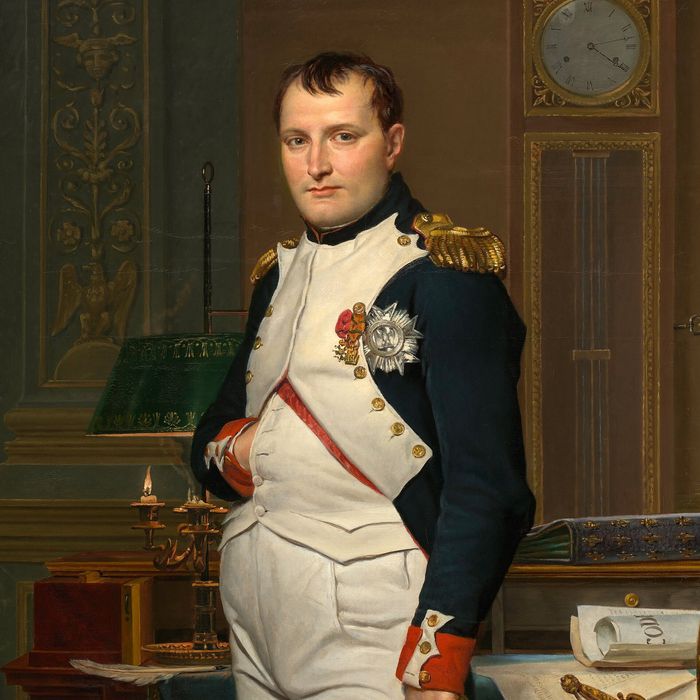
Jacques Louis David, The Emperor Napoleon in His Study at the Tuileries, 1812. Public domain, via Wikimedia Commons.
Over the map, before the battle.
On the page, about three letters a day.
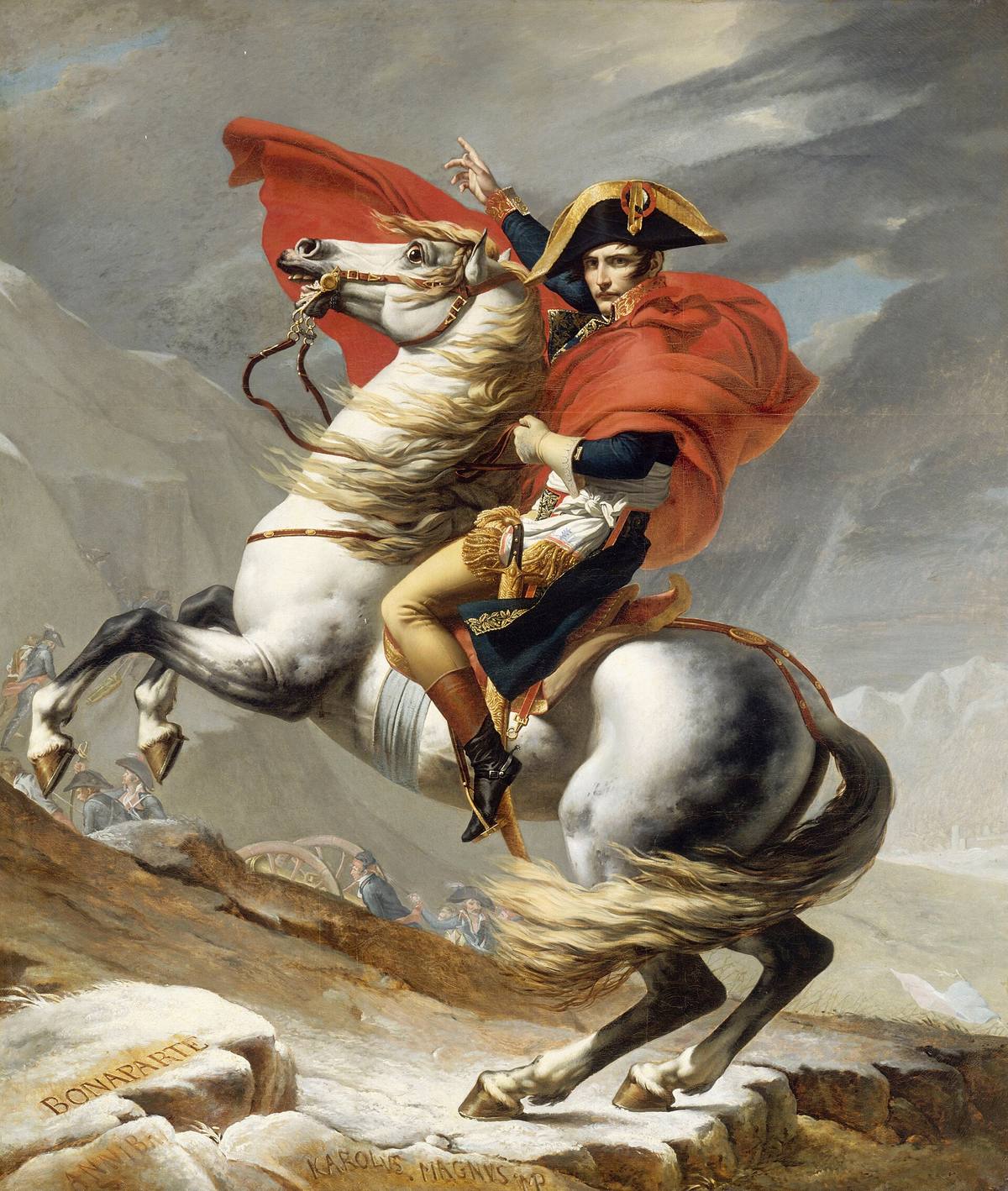
Back on the road, the year after the fall.