Billionaire Road
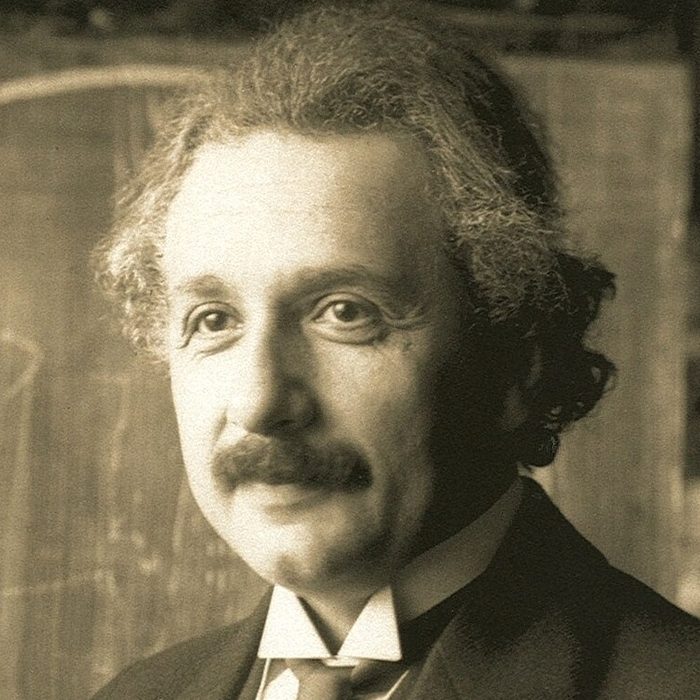
Albert Einstein in 1921, in a dark suit

Born 1879. Died 1955.

Albert Einstein

Where the hours went: At the patent desk, then the blackboard.

He failed his first college entrance exam.
At twenty six, with a full time job, he wrote four papers that changed physics.
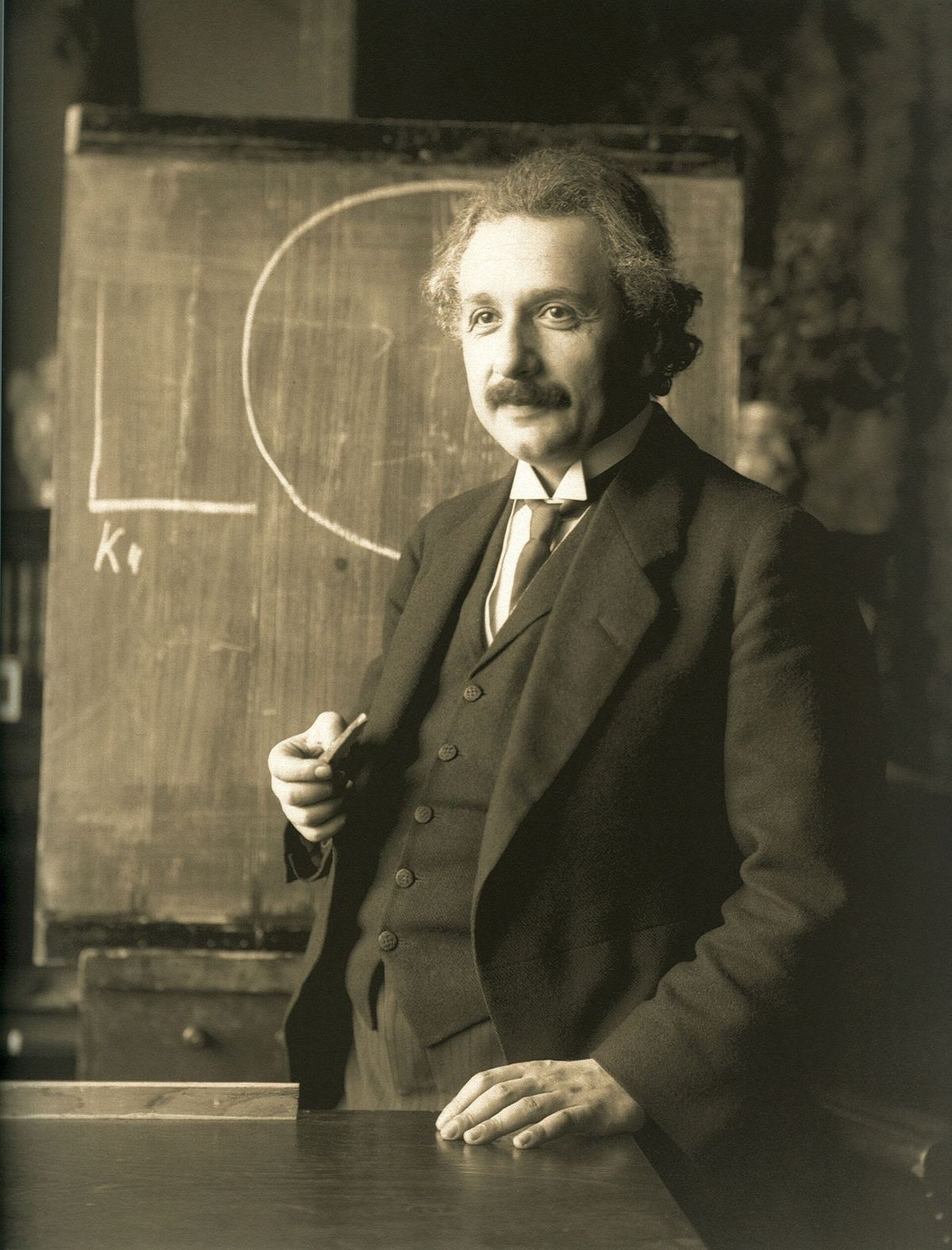
Albert Einstein at a blackboard in Vienna, chalk in hand
Ferdinand Schmutzer, Albert Einstein at a lecture in Vienna, 1921. Public domain, via Wikimedia Commons.

In thirty seconds

His hours

A full time job at the patent office, physics in the hours left over.

His rep

Four papers in 1905, at twenty six.

It reached

His work on light won the Nobel Prize.

Most men think the titans got there on talent.
They got there on where the hours went.

01The exam at sixteen

In 1895, at sixteen, he failed the entrance exam for the polytechnic in Zurich.
He was strong in math and physics and weak in the other subjects.
A year later he finished school with top marks in math and physics.[5][6]

02No post

He graduated in 1900 and could not land a university job.
He tutored and filled in as a substitute teacher.[1][2]

03The patent desk

In 1902 he took a job as a technical examiner at the Swiss patent office in Bern.
It was a full time job, and he kept it for seven years.[2][3]

04Four papers at twenty six

In 1905 he wrote four papers that changed physics, on light, on the motion of atoms, on space and time, and on mass and energy.
That same year he finished his doctoral thesis.
All of it came in the hours around the patent office job.[2][4]

05The long work on gravity

In 1909 he left the patent office for the University of Zurich.
He kept working on gravity through Prague, Zurich and Berlin.
In November 1915 he finished general relativity.[1][2]

06The eclipse

In 1919 an eclipse expedition measured starlight bending around the sun, as he had predicted.
He became famous around the world.[1][2]

07The prize for light

He won the Nobel Prize in Physics for 1921, handed out the next year.
The committee named his work on the photoelectric effect, from 1905.[7][1]

08Princeton

In 1933 he left Germany for the Institute for Advanced Study in Princeton.
He worked there on a unified theory he never finished.
He died in Princeton on April 18, 1955, at seventy six.[1][2]

The legend vs. the reps

The legendHe failed math in school.

The repsTop marks in math and physics on his 1896 school certificate.
He failed one college entrance exam at sixteen, on the subjects outside science.[5][6]

The legendHe was just a patent clerk.

The repsHe was a full time examiner at the patent office.
He wrote the four papers of 1905 in the hours around that job.[2][4]

The legend counts genius.
The record counts reps.
Four papers in one year, written around a full time job.

His years

Every year the record allows, with its source.

1879Born

He was born in Ulm, Germany.[1][2]

1895At 16

He failed the Zurich entrance exam, strong in math and weak in the rest.[5][6]

1896At 17

He finished school with top marks in math and physics.[5][6]

1900At 21

He graduated and could not find a university post.[1][2]

1902At 23

He started as an examiner at the Swiss patent office in Bern.[2][3]

1905At 26

He wrote four papers that changed physics, around his patent office job.[2][4]

1909At 30

He left the patent office for the University of Zurich.[1][3]

1914At 35

He moved to Berlin.[1][2]

1915At 36

He finished general relativity.[1][2]

1919At 40

An eclipse confirmed his prediction and made him famous.[1][2]

1921At 42

He won the Nobel Prize in Physics for his work on light.[7][1]

1933At 54

He left Germany for Princeton.[1][2]

1939At 60

He signed a letter to President Roosevelt warning about atomic bombs.[1][2]

1955At 76

He died in Princeton.[1][2]

Ferdinand Schmutzer, Albert Einstein, 1921, cropped. Public domain, via Wikimedia Commons.

Where his hours went

At the patent desk by day.
On physics in the hours left over.
On gravity for years after that.

See where your hours go.

A week is 168 hours.
One minute to see where yours went.

Count your 168 →

See what he was doing at your age →

See how much freedom your money buys →

Sources

  1. Wikipedia, Albert Einstein, drawing on Walter Isaacson, Einstein: His Life and Universe (2007): his birth in Ulm in 1879, graduation in 1900, the move to Zurich in 1909 and Berlin in 1914, general relativity in 1915, the 1919 eclipse, Princeton in 1933, the 1939 letter, his death on April 18, 1955.
  2. Encyclopaedia Britannica, Albert Einstein: from graduation to the miracle year: no academic post, the patent office in 1902, the papers and the thesis of 1905, general relativity, the eclipse, Princeton, the letter, his death.
  3. German Patent and Trade Mark Office, Great inventors: Albert Einstein: his years at the patent office in Bern, 1902 to 1909.
  4. Rigden and others, Albert Einstein: His Annus Mirabilis 1905 (arXiv physics/0701240): the four papers of 1905, written while he worked at the patent office.
  5. TIME, Did Einstein Flunk Math: the 1895 entrance exam, the 1896 school certificate, the 1935 Ripley's column and his reply that he never failed in mathematics.
  6. Today I Found Out, Albert Einstein Did Not Fail at Mathematics in School (2011): the Ripley's column, his reply, his top marks in math and physics in 1896.
  7. NobelPrize.org, The Nobel Prize in Physics 1921: awarded to Albert Einstein in 1922, naming his discovery of the law of the photoelectric effect.