Billionaire Road
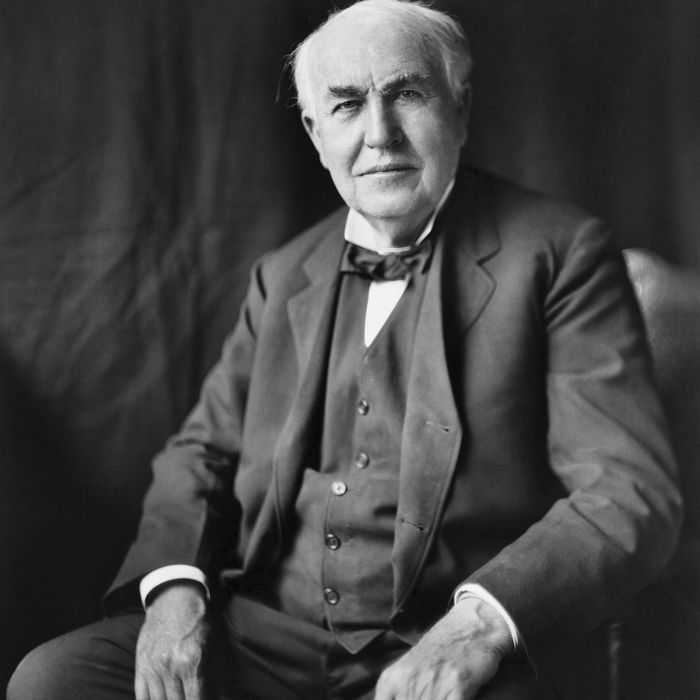
Thomas Edison seated, in a dark suit

Born 1847. Died 1931.

Thomas Edison

Where the hours went: In the lab, trial after trial.

He had a few months of school.
He turned a lab of men into the first invention factory.
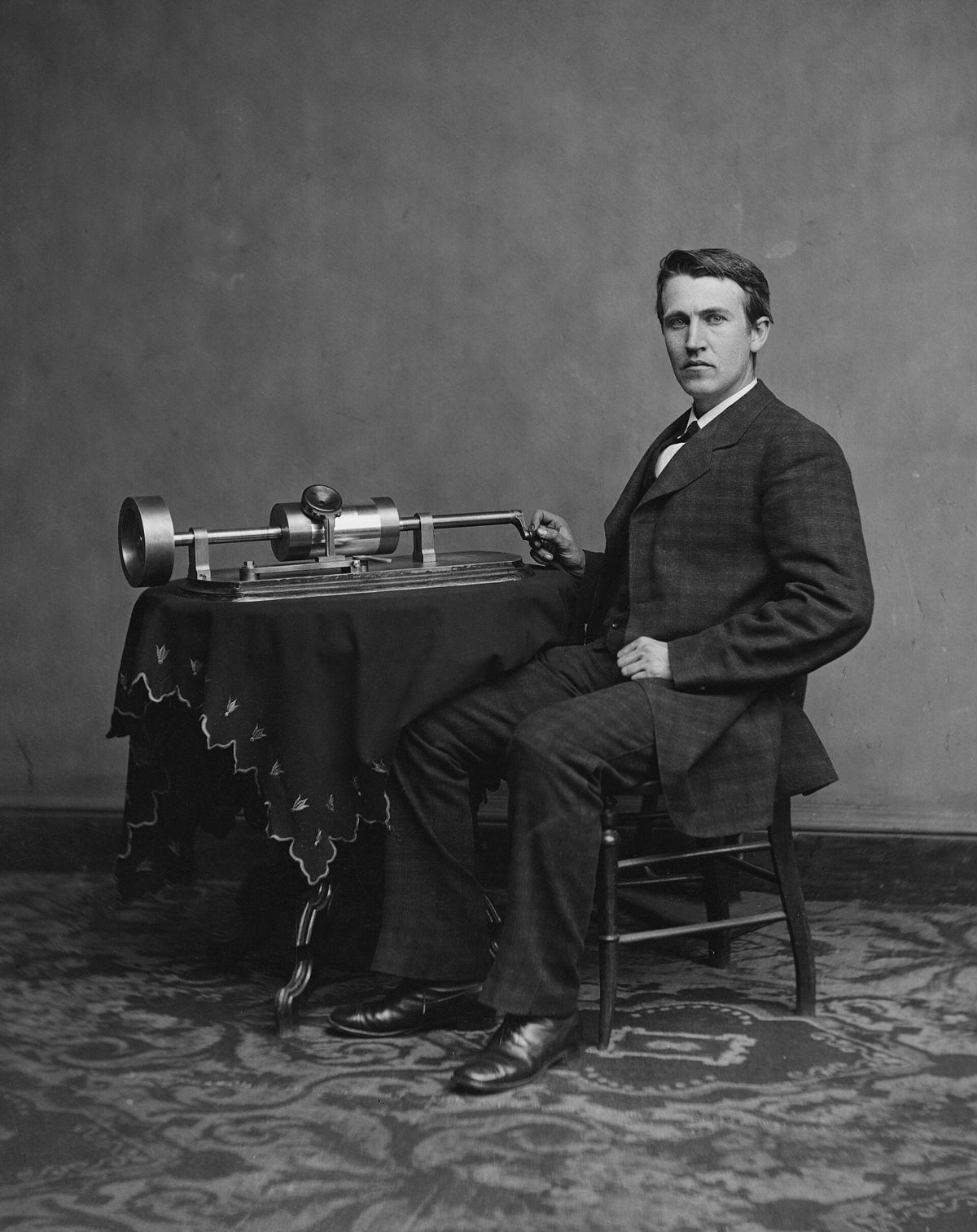
Thomas Edison beside his phonograph
Levin C. Handy, Thomas Edison with his phonograph, about 1877, Library of Congress. Public domain, via Wikimedia Commons.

In thirty seconds

His hours

A lab that ran trials day and night at Menlo Park.

His rep

No fewer than six thousand plant materials tested for one filament.

It reached

Electric light and power for whole cities, recorded sound and the motion picture.

Most men think the titans got there on talent.
They got there on where the hours went.

01A few months of school

He was born in Milan, Ohio, in 1847, and grew up in Port Huron, Michigan.
He spent only a few months in school.
By about twelve he was losing his hearing.[1][2]

02The telegraph key

In his teens he learned telegraphy and spent years as a telegraph operator.
In 1869 he got his first patent, an electric vote recorder.
Around 1870 he opened a shop in Newark making telegraph and stock ticker gear.[1][2]

03The invention factory

In 1876 he built a laboratory at Menlo Park, New Jersey, a place made for nothing but inventing.
His team of men ran trials there day and night.
In 1877 it gave the world the phonograph.[1][2][4]

04Six thousand growths

In 1879 his team got a carbon filament to glow for hours.
Hunting for a better one, he tested no fewer than six thousand plant materials, by his own count.
In 1880 they landed on bamboo, and some of those lamps burned for more than twelve hundred hours.[2][3][4]

05Light for a city

On September 4, 1882, his Pearl Street station switched on and lit part of Manhattan.
It was the first commercial power station.[1][2]

06Several thousand things

From his early fifties he spent about ten years on a storage battery.
In 1910, asked about the results, he said he knew several thousand things that would not work.[1][6]

07The fire at sixty seven

On December 9, 1914, fire tore through his West Orange plant and destroyed thirteen buildings.
He said he was over sixty seven years old and would start all over again tomorrow.[2][5]

08The last lab

At eighty he started a search for natural rubber.
He died at home in West Orange on October 18, 1931, at eighty four.[1][2]

The legend vs. the reps

The legendHe failed a thousand times before the light bulb worked.

The repsNo fewer than six thousand plant materials tested for the filament, by his own count.
A lab of men running trials day and night at Menlo Park.[3][4]

The legendHe found ten thousand ways that would not work.

The repsHe said several thousand, in 1910, about the storage battery.
That job took him about ten years.[1][6]

The legend counts failures.
The record counts reps.
Thousands of trials, then a lamp that burned for more than twelve hundred hours.

His years

Every year the record allows, with its source.

1854At 7

His family moved to Port Huron, and he spent only a few months in school.[1][2]

1859About twelve

He was already losing his hearing.[1][2]

1862In his teens

He learned telegraphy and set out as a telegraph operator.[1][2]

1869At 22

He got his first patent, an electric vote recorder.[1][2]

1870About twenty three

He opened a Newark shop making telegraph and stock ticker gear.[1][2]

1876At 29

He built the Menlo Park laboratory.[1][2][4]

1877At 30

His lab gave the world the phonograph.[1][2]

1879At 32

His team got a carbon filament to glow for hours.[2][3]

1880At 33

He settled on bamboo, after thousands of plant materials.[2][3]

1882At 35

His Pearl Street station lit part of Manhattan.[1][2]

1884At 37

His wife Mary died.[1][2]

1887At 40

He opened a bigger laboratory in West Orange.[1][2]

1894At 47

Paying crowds watched his first motion pictures.[1][2]

1900About fifty three

He started about ten years of work on a storage battery.[1][6]

1910At 63

He said he knew several thousand things that would not work.[6][1]

1914At 67

Fire destroyed his plant, and he said he would start over tomorrow.[2][5]

1927At 80

He began a search for natural rubber.[1][2]

1928At 81

Congress gave him its Gold Medal.[1][2]

1931At 84

He died at home in West Orange.[1][2]

Louis Bachrach, Bachrach Studios, Thomas Edison, about 1922. Public domain, via Wikimedia Commons.

Where his hours went

In the lab, with the team, day and night.
On the next trial, not the last one.
Ready to start over at sixty seven.

See where your hours go.

A week is 168 hours.
One minute to see where yours went.

Count your 168 →

See what he was doing at your age →

See how much freedom your money buys →

Sources

  1. National Park Service, Thomas Edison National Historical Park, timeline of Edison and his inventions: Port Huron, the telegraph years, the first patent, Menlo Park, the phonograph, Pearl Street, West Orange, the motion pictures of 1894, the battery decade, the fire, rubber, the Gold Medal, his death.
  2. Wikipedia, Thomas Edison: his birth in 1847, the few months of school, his hearing, the vote recorder patent of June 1, 1869, Newark, Menlo Park in 1876, bamboo lamps over 1,200 hours, Pearl Street on September 4, 1882, Mary's death in 1884, West Orange in 1887, the December 1914 fire and its thirteen buildings, the 1928 medal, his death on October 18, 1931.
  3. The Franklin Institute, Edison's Lightbulb: his own count of no fewer than 6,000 vegetable growths tested for the filament, bamboo, lamps that burned more than 1,200 hours.
  4. Thomas A. Edison Papers, Rutgers University: Menlo Park as a research laboratory and its team, and the bamboo documents of December 1880.
  5. Thomas A. Edison Papers, Rutgers University, press clippings: Newark News, December 10, 1914, and Engineering Record, December 19, 1914, on the West Orange fire and his words that he would start over the next day.
  6. Quote Investigator, I Have Gotten a Lot of Results. I Know Several Thousand Things That Won't Work (2012): the 1910 account by Walter Mallory, about the storage battery.